


Folk brukar klaga på att göra sojamjölk hemma smakar bittert och frågan är hur kan jag få det att smaka mer som förpackat?
1. Blöt bönor i kokt vatten över natten (minst 8-10 timmar)
2. På morgonen häll av blötvattnet och skölj bönorna väl.
3. Börja ta bort skinnen. För detta, placera bönor i en stor skål fylld med ljummet vatten. I vattnet, pressa sojabönorna lätt mellan dina fingrar starkt i några minuter, kommer skinnen lätt att tas bort. Du ska få så många skinn av så fort som möjligt.
4. När de är skrovade, plocka skinn och slösa bort. Tvätta och skölj skrovade bönor bra. Överför till din mixer.
5. Att skaka oskalade bönor i kokande vatten kommer att minska den smaka smak som orsakas av lipoxygenas. Så det kan dödas med hjälp av värme.
6. Efter blandning och töjning, överför din mjölk till en kruka, lägg till din favorit sötningsmedel och laga på låg värme minst 30 minuter eller tills du når önskad smak.
People usually complain that making soy milk at home tastes bitter and the question is that how can I get it to taste more like packaged one?
1. Soak beans in boiled water overnight ( at least 8-10 hours)
2. In the morning pour off the soaking water and rinse beans well.
3. Start to remove the skins. For this, place beans in a large bowl filled with lukewarm water. In the water, lightly squeeze the soybeans between your fingers strongly for a few minutes, skins will be removed easily. You should get as many of the skins off as fast as possible.
4.When they are hulled, pick skins and go to waste. Wash and rinse hulled beans well. Transfer into your blender.
5.Soaking unhulled beans in boiling water will reduce the beany flavor, which is caused by lipoxygenase. So, it can be killed by the help of heat.
6.After blending and straining process, transfer your milk into a pot, add your favorite sweetener and cook on low heat at least 30 minutes or untill reach to desired taste.

Nedir bu?
Yanmış sebze kabukları, tepeleri ve köklerinden oluşan bir çeşit toz.
Peki neden?
Kül yiyeceklere acı, dumanlı bir tat vermek için kullanılır ve aynı zamanda yaşlanmanın ilk birkaç günü için peynirin istenmeyen küf ve bakterilere karşı korunmasına da yardımcı olur. Ayrıca, peynirin pH yüzeyini değiştirir.
Genellikle dünyanın dört bir yanındaki şefler tarafından eşsiz lezzet ve sürdürülebilir bir çaba sarf etmek için kullanılır.
Nasıl kullanılır?
Kullanmak için biraz ince deniz tuzu ile karıştırın ve peynirin üzerine serpin.
Nasıl yapılır?
Malzemeler:
Soğan, pırasa, biber, havuç, kereviz gibi çeşitli sebzeler (hafta boyunca soyduğunuz sebzelerinizin kabuklarını, uçlarını vb. Saklayın)
Yöntem:
1. Sebzeleri düz ve büyük bir fırın tepsisine koyun ve artıkları tamamen kavruluncaya kadar 2 saat boyunca 500 ° F / 260 ° C’de fırınlayın.
2. Karbon gibi sebzeler incecik toz şeklinde görünene kadar blenderda karıştırın ve ince bir elekten geçirin.

Vad är Ash?
Det är ett slags pulver av brända grönsaksskinn, toppar och ändar …
Varför?
Ask används huvudsakligen för att ge en bitter, rökig smak åt mat och det hjälper också till att skydda osten mot oönskade mögel och bakterier under de första dagarna av åldrandet. Dessutom ändras ostens pH-yta.
Vi kan säga att det vanligtvis används för att lägga till både unik smak och en hållbar satsning på gourmeträtter av kockar runt om i världen.
Hur man använder?
För att använda den, blanda med lite fint havssalt och strö över osten.
Hur man gör?
Ingredienser:
Olika grönsaker som lök, purjolök, peppar, morot, selleri (Spara dina veggieplagg, skinn, ändar etc. under hela veckan)
Metod:
1.Lägga grönsakerna platt och till och med på ett stort arkskål och bröda vid 500 ° F / 260 ° C i 2 timmar tills skrapor är helt brända.
2.Brandera de kolsyrade grönsakerna tills det ser ut som smuts, passera sedan igenom en fin siffra.
 Serverar 2
ingredienser:
4 msk inlagd lila kål,
2 stor potatis, skivad i små kuber,
2 matskedar olivolja,
1/2 gäng färsk dill hackad,
1/2 tsk jord senap,
1/2 tsk vitlök granulat,
1/8 tsk svartpeppar,
3-4 skalot,
100 gr. kikärter kokta i kokosnöt,
1 tsk chili peppar,
1 tsk salt
metod:
1. Placera potatis kuber, vitlök granulat, skalot, blackpepper och salt. Blanda med händerna bra. Baka på 200 grader tills det är friterat. Ta sedan bort från ugnen, strö korkad dill. Placera i en tallrik.
2. Blanda kikärter med salt, olivolja och chili peppar i en gryta. Överför till din tallrik.
3. Lägg till sylt lila kål. Servera!


Malzemeler:
4 çorba kaşığı mor lahana turşusu,
Küçük küpler halinde kesilmiş 2 büyük patates (mor ve sarı),
2 yemek kaşığı zeytinyağı,
Taze dereotu 1/2 demet doğranmış,
1/2 çay kaşığı öğütülmüş hardal,
1/2 çay kaşığı sarımsak granülü,
1/8 çay kaşığı karabiber,
3-4 arpacık soğan,
100 gr hindistan cevizi sütüyle pişmiş nohut,
1 tatlı kaşığı pul biber,
1 çay kaşığı tuz
Yapılışı:
1. Küp küp doğradığınız patatesler büyük bir kaseye koyun, üzerinde 1 çorba kaşığı zeytinyağı gezdirin, öğütülmüş hardal, sarımsak granülü, arpacık soğan, biber ve tuz ekleyin. Ellerinle iyice karıştırın. Kızarana kadar 200 dereceye ayarlanmış fırında pişirin. Ardından fırından çıkarın, doğranmış dereotu serpin, iyice karıştırın. Bir tabağa koyun.
2. Bir tencerede, pişmiş nohutu tuz, zeytinyağı ve acı biberle karıştırın. Tabağa aktarın.
3. Mor lahana turşusu ekleyerek servis edin!


Malzemeler:
80 gr çiğ kaju fıstığı, bir gece önceden suda bekletilmiş,
220ml. aquafaba,
2 yemek kaşığı tapyoka nişastası,
3 çay kaşığı irlanda yosunu tozu ( kappa karragenan),
1 çay kaşığı limon suyu ( ya da laktik asit),
1 çay kaşığı tütsü aroması sıvı,
1/2 çay kaşığı tütsülenmiş paprika,
1/4 çay kaşığı zerdeçal,
1 çay kaşığı organik elma sirkesi,
2 çay kaşığı organik salça,
1 çorba kaşığı besin mayası,
1 çay kaşığı himalaya tuzu,
5 çorba kaşığı rafine hindistancevizi yağı erimiş.
Yapılışı:
1. Islatılmış kaju fıstığı ve aquafaba’yı yüksek hızda bir blenderde pürüzsüz olana kadar karıştırın.
2. Daha sonra büyük partikülleri ayırmak için karışımı süzgeçten geçirin. Ardından karışımı tekrar blenderınıza aktarın.
3. Tapyoka nişasta, kappa carrageenan, limon suyu, domates salçası, zerdeçal, paprika, besin mayası ve tuzu ekleyin, yüksek hızda iyice karıştırın.
4. Hindistan cevizi yağı ve tütsü aromasını ekleyin ve tekrar pürüzsüz kıvam elde edene kadar karıştırın.
5. Karışımı bir tencereye aktarın, orta ateşte sürekli karıştırarak pişirmeye başlayın. Tapyoka nişastası harekete geçtiğinde topaklaşmaya başlayacak. Yüksek hızda bir çırpıcı ile hiç durmadan çırpmaya devam edin. Durduğunuz anda topaklaşmaya başlayacak ve bu istenmeyen bir durumdur.
İşleme uzun süre devam ettiğinizde ipeksi ve akışkan bir peynir halini alacak. Karışımın etrafında kabarcık oluşturmaya ve kalınlaşmaya başladıktan sonra hazır olduğunu anlayabilirsiniz.
6. O zaman ocaktan çıkarın. Elma sirkesini ekleyin ve iyice birleştirilene kadar hızlıca karıştırın.
7. Karışımı bir parşömen kağıdı serilmiş kaseye dökün ve kapatın. Dolaba kaldırın tercihin bir gece en az 5-6 saat buzdolabında bekletin. Ardından dilimleyerek tüketebilir ekmeklerinize sürebilir ya da pizza ve tostlarınızda eriterek kullanabilirsiniz.


Kappa karragenan nedir, güvenli mi? Sağlık konusunda endişeleriniz varsa kullanmadan önce yaptığım araştırmaya buradan göz atmak isteyebilirsiniz.


Ingredienser:
80 gr rå cashewnötter, blötläggs över natten,
220 ml. aquafaba,
2 msk tapiokastärkelse,
3 tsk kappa carrageenan,
1 tsk citronsaft,
1 tsk rökvätska,
1/2 tsk paprika,
1/4 tsk gurkmeja,
1 tsk ekologisk äppelcidervinäger,
2 tsk ekologisk tomatpasta,
1 msk näringsjäst,
1 tsk himalayan salt,
5 msk raffinerad kokosnötolja smält.
Metod:
1. Blanda blötläggda cashewnötter och aquafaba i en höghastighetsblandare tills den är jämn.
2. Spänn sedan blandningen för att avlägsna stora partiklar. Överför sedan blandningen till mixern igen.
3.Tillsätt tapiokastärkelse, kappa carrageenan, citronsaft, tomatpasta, gurkmeja, paprika, näringsjäst och salt och puls i mixern för att kombinera bra.
4.Tillsätt kokosnötsolja och rökvätskeblandning igen mycket tills tjock och jämn.
5.Hett i en medelstora kastrull över medium-låg värme under omröring regelbundet. Det kommer att se ut som ganska klumpigt eftersom tapiokastärkelsen aktiveras.
Det blir så småningom glänsande och smidig, som smält ost. Du kommer att se det började bubbla runt kanterna och behålla dess tjocklek då det är gjort.
6. Ta bort från värmen. Tillsätt äppelcidervinäger och blanda snabbt tills det kombineras väl.
7. Lägg i en form med ett pergamentpapper. Kyl minst 6 timmar före skivning. Det är perfekt på pizza eller rostat bröd och smältbar.


Vad är Kappa carrageenan? Är det säkert? Om du är orolig för hälsan, kanske du vill kolla på min forskning härifrån innan du använder den.


Ingredients:
80 gr raw cashews, soaked overnight,
220ml. aquafaba,
2 tbsp tapioca starch,
3 tsp kappa carrageenan,
1 tsp lemon juice,
1 tsp smoke liquid,
1/2 tsp smoked paprika,
1/4 tsp turmeric,
1 tsp organic apple cider vinegar,
2 teaspoon organic tomato paste,
1 tablespoon nutritional yeast,
1 tsp himalayan salt,
5 tbsp refined coconut oil, melted.
Method:
1. Blend soaked cashews and aquafaba in a high speed blender until smooth.
2. Then strain mixture to remove large particles. Then transfer mixture to your blender again.
3.Add tapioca starch, kappa carrageenan, lemon juice, tomato paste, turmeric, paprika, nutritional yeast, and salt and pulse in the blender to combine well.
4.Add coconut oil and smoke liquid blend again very until thick and smooth.
5.Heat in a medium saucepan over medium-low heat while stirring regularly. It will look like quite lumpy as the tapioca starch activates.
It will eventually turn glossy and smooth, like melted cheese. You will see it begun to bubble around the edges and maintain its thickness then it is done.
6. Remove from the heat. Add apple cider vinegar and blend quickly until combined well.
7..Pour into a mold with a parchment paper. Refrigerate at least 6 hours before slicing. It is perfect on pizza or toast and meltable.
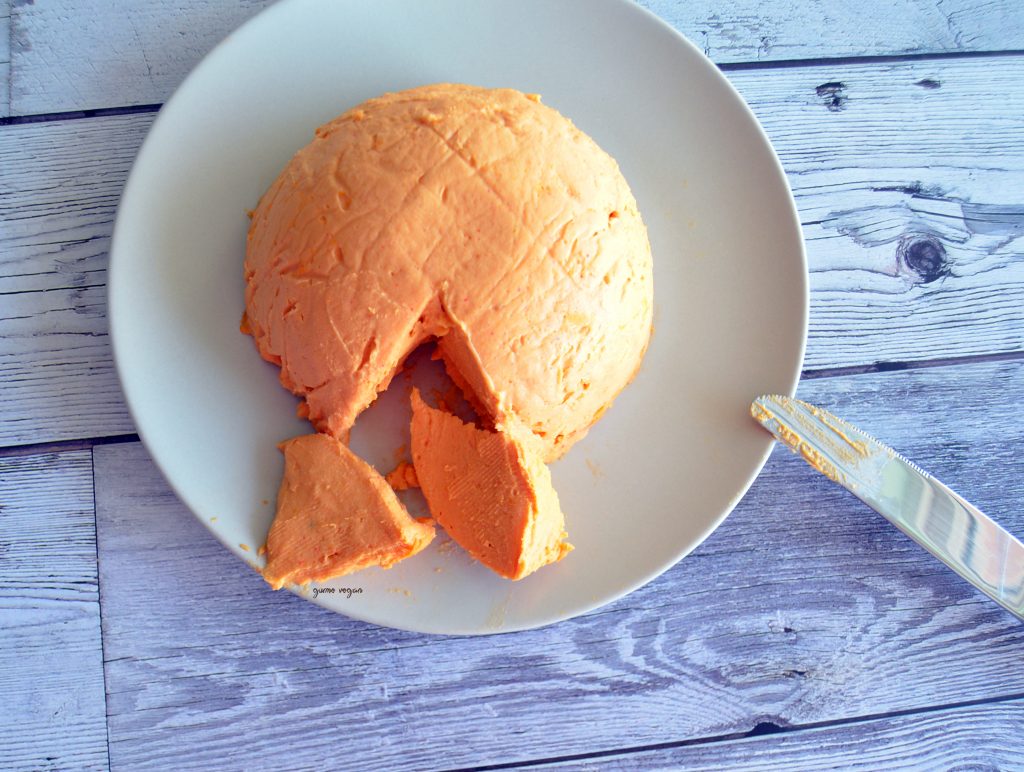


What is Kappa carrageenan? Is it safe? If you are concerned about health, you may want to have a look at my research from here before using it.

 c
c